 Mohini Yadav
 Ajit Mohan Yadav
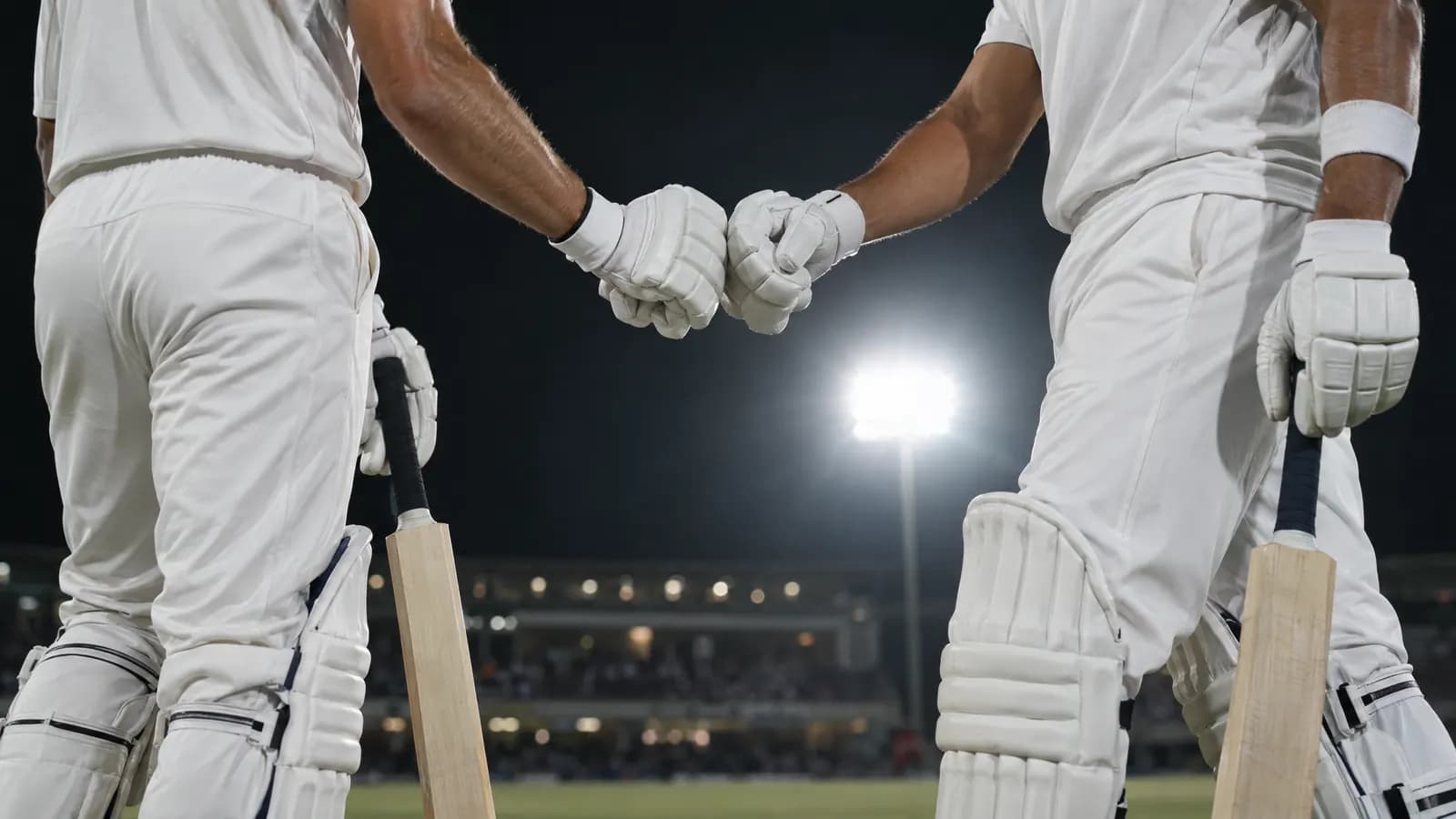
India chased 406 against West Indies in Guwahati on Wednesday 30 September 2026, reaching 406 for 2 in 43.3 overs. Shubman Gill's unbeaten 223 and Rohit Sharma's 101 made the second successful ODI chase of more than 400 look calm rather than impossible. The useful lesson is not that every huge target can be attacked blindly: a fast start, a huge opening stand, sensible risk and a pitch offering almost no help to bowlers all arrived together.
First, translate the target into a plan
West Indies' 405 for 7 was not a fluke total. John Campbell made 101, Shai Hope 104 and Amir Jangoo 114, while Hope and Jangoo added 182. West Indies also hit 50 boundaries. India therefore began with a target that demanded 8.12 runs per over across the full 50 overs, before allowing for wickets, quiet overs or a late collapse.
India's answer was to change the shape of that calculation immediately. Gill and Rohit did not need to hit a six from every second ball. They needed to keep the asking pace from becoming a problem while preserving wickets. Gill later said India's powerplay aim was roughly 75 to 80 without losing a wicket. That is a practical chase plan: start quickly enough to put pressure back on the fielding side, but do not make the first six overs a coin toss.
The chase finished at 9.33 runs per over, but that figure is easier to understand when the early overs are included. Once a team has scored well ahead of the required pace, the last 15 or 20 overs can be played with more options. The target is still 406, yet the required pace is no longer controlling every decision.
The fast start was about pressure, not panic
Rohit reached 35 from 27 balls and Gill moved to 36 from 21. Those numbers show two different methods producing the same effect. Rohit used experience to find boundaries early; Gill combined strong drives and aggressive shots when the ball was in his hitting zone. Neither opener had to copy the other.
That is an important batting idea in any long chase. A pair can share the work by keeping both ends active. One batter may attack a particular bowler while the other takes singles, but both still prevent a string of dot balls. The fielding captain then has fewer comfortable fields: a boundary-saving field gives away singles, while a saving field leaves gaps for the boundary shot.
West Indies also offered help. The match report noted ordinary lines and lengths from Alzarri Joseph in the second over, and the pressure never really left once India settled. That does not take away from India's skill. Good batters recognise when a bowler is missing the ideal area and score hard before the bowler can reset.
Why the 255-run partnership mattered so much
The first-wicket stand ended at 255 from 26.2 overs, India's biggest partnership in an ODI chase. Rohit contributed 101 from 75 balls; Gill was already 142 from 82 when Rohit fell. Together they supplied more than 62% of the eventual 406 before the first wicket arrived.
Partnerships do more than add runs. They protect a chase from a sudden sequence of new batters facing the hardest phase of the innings. A settled pair knows the pace of the pitch, understands which bowlers can be attacked and can communicate about the next over. If one player takes a risk, the other can choose the lower-risk option and keep the innings moving.
The stand also created a useful scoreboard cushion. At 255 for 1, India still needed 151 from 23.4 overs, which is close to 6.4 an over. That is a demanding challenge, but it is far less frightening than asking the incoming batter to find 151 from the final 10 overs. Front-loading the scoring did not mean the chase was finished; it meant the remaining batters could make decisions rather than force a big shot on every delivery.
The pitch made attacking batting possible
Barsapara offered almost nothing to the bowlers. ESPNcricinfo described little swing, little seam, negligible turn, hardly any change in bounce or pace, and no reverse swing. The outfield was lightning quick, so even defensive pushes could race away for four.
Those conditions explain why the same attacking shot could be worth more than usual. A firm push into a gap became a boundary; a mistimed shot was less likely to die in a slow surface. But a flat pitch is not an automatic invitation to swing at everything. It rewards watching the ball, choosing the right length and staying in long enough to cash in.

Gill's innings shows that distinction. He finished with 223 not out from 133 balls, including 26 fours and eight sixes. The report says he charged the quick bowlers, pulled the short balls that followed and attacked part-time offspin, but he also kept going after reaching a hundred. The fastest scoring came from controlled choices repeated for a long time, not from one spectacular over.
What happened when wickets fell?
Rohit's dismissal at 255 for 1 did not create a crisis because India had already built a strong base. Virat Kohli joined Gill and added 65 for the second wicket. When Kohli fell at 320 for 2 after 32.1 overs, India needed only 86 from 17.5 overs: less than five an over.
Ruturaj Gaikwad then made 31 not out from 37 balls while Gill continued the attack. This is risk management in its simplest form. The new batter does not need to match Gill's scoring speed; he needs to avoid a cluster of dot balls, take the available single and leave the established batter facing enough deliveries.
Gill's unbeaten score was the highest in an ODI chase, and his double-century came from 117 balls, the fastest in ODI cricket according to the match report. Those are extraordinary records, but the partnership mathematics explains why the records were possible. Gill could take risks because the opening stand had moved India so far ahead, and he could keep attacking because a dependable partner was at the other end.
A simple checklist for watching a huge chase
When a team is chasing 350 or more, look beyond the required total. Ask four questions:
- How quickly did the openers start? A strong first phase prevents the target from becoming a late-innings emergency.
- How many wickets are in hand? Boundaries matter, but a pair that stays together can keep the asking pace manageable.
- Is the pitch helping the bowlers? Swing, seam, turn and a slow outfield change the value of every shot.
- What happens after the first wicket? A chase stays healthy when the next batter rotates the strike and the established batter chooses the high-value moments.
India's 406 was extraordinary because all four answers went their way. The pitch stayed true, the outfield rewarded contact, Rohit and Gill attacked without breaking the partnership, and Kohli and Gaikwad made the final phase routine. Fans can follow the next big chase through FairPlay's live scores, compare completed matches in the cricket results section, or use the one-day cricket statistics page to put a new target in context.
Sources: ESPNcricinfo: Gill 223* sets up record chase for India · ESPNcricinfo: India vs West Indies, 2nd ODI full scorecard · ESPN: India vs West Indies 2nd ODI match centre
This piece was written by the FairPlay Editorial Desk with AI assistance, using the published sources above. It was reviewed by Mohini Yadav and Ajit Mohan Yadav of the FairPlay editorial team before publication. To report an error, see our Editorial Policy.